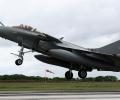
The western media is going all out to prove that India suffered a major setback in Operation Sindoor and how China helped shoot down Indian fighter jets. One of the articles published in British newspaper Telegraph stated Operation Sindoor shattered the myth of India's air dominance over Pakistan. "The Pakistani Air Force, aided by Chinese targeting satellites and AWACS executed a sensor-fusion kill. The Rafales never got a lock, never even saw their adversary. When the missiles hit, it was already over," wrote the British Newspaper, The Telegraph.

The move comes close on the release of a report by Pentagon, which suggested that China has moved its new advanced longer range CSS-5 missiles close to its border with India and developed contingency plans to shift airborne forces to the region at short notice.

Describing the visit as "productive" in a post on X, the PM said he emphasised India's position on key global issues during his engagements.
It is learnt that the India's top military brass is constantly monitoring the evolving situation even as the United States said the aggressive behaviour by Chinese troops was a reminder of the threat posed by China.
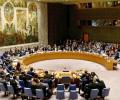
Pakistan and China have submitted a joint bid at the UN Security Council to designate the Balochistan Liberation Army (BLA) and its suicide wing - Majeed Brigade - as a terrorist entity under the Council's 1267 Al Qaeda Sanctions Committee.

The initial public offering (IPO) market in India last year was hot, with companies raising over $22 billion in 2025. But half of the 350-plus companies that listed on the stock exchange last year traded below their offer price, according to a new research report released by HSBC Global Investment Research - a sobering fact despite what otherwise looked like a rush of companies eager to list on the bourses.
He said the 2 countries have handled border issues in the past.

No conclusive end was reached in the talks.
Arunachal Pradesh Chief Minister Pema Khandu has expressed grave concerns over China's mega dam project near the Arunachal border, calling it a 'water bomb' and an existential threat.
India has lodged a "solemn protest" with China over the establishment of two new counties in the Hotan prefecture, as parts of these regions fall within India's union territory of Ladakh. The Indian government asserted that the creation of these counties will not impact its sovereignty over the area and does not lend legitimacy to China's "illegal and forcible" occupation.
India on Wednesday outright rejected China's attempts to rename some places in Arunachal Pradesh, saying such 'preposterous' attempts will not alter the 'undeniable' reality that the state 'was, is, and will' always remain an integral part of India.
Colonel Anil Athale (retd), the official historian of India's 1962 war with China, pin-points the reasons for the clash between the Asian giants 50 years ago and the series of blunders that led to India's military humiliation.

'The unexpected turn of events and assertion of sovereignty by the Taliban has baffled the Pakistan security establishment.'

In the Indo-Pacific's new era -- where perception shapes reality faster than treaties -- the real entrapment is not of China or the United States. It is the test Japan has set for itself -- and whether partners like India, acting as balancers rather than accelerants, can help ensure that the story ends in stability, points out Varun Arya.

The Sikkim government has announced the opening of Doka-La and Cho-La battlefields for domestic tourists starting October 1, under the Bharat Ranbhoomi Darshan initiative. Strict guidelines for security and environmental protection will be in place.
'The only choice we have is to strengthen ourselves militarily and economically and develop friendships with others without alarming our neighbours, says Ambassador T P Sreenivasan.

India's engagement with China is "complex" and Chinese attempts to unilaterally alter the status quo along the Line of Actual Control (LAC) in eastern Ladakh starting from April-May 2020 seriously disturbed the peace and tranquillity in border areas, the ministry of external affairs (MEA) said in a report on Monday.

However, the government rejected the army's demand to implement the scheme with retrospective effect from June last year, when the Doklam face-off between Indian and Chinese armies had begun, official sources said.
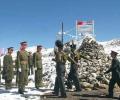
The two sides have already held at least 12 rounds of talks between local commanders and three rounds of talks between major general-rank officials but no positive outcome came out from the discussions, they said.

'Uncertainty level A in the morning, uncertainty level B in the afternoon. If I answer about tariff rates now, I'll be outdated by the evening.'
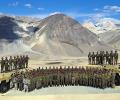
Her comments come a day after External Affairs Minister S Jaishankar said in Geneva that roughly 75 percent of the "disengagement problems" with China are sorted out but the bigger issue has been the increasing militarisation of the frontier.
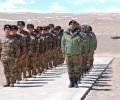
The sources said both sides held extensive deliberations on modalities for disengagement of troops from all the friction points in eastern Ladakh at the talks.

'The next two to three weeks will not be decided in Washington.' 'They will be decided in Tehran, in whatever calculation Iran makes about the costs of continued resistance against the costs of appearing to have yielded.'

The heightened state of alert was only relaxed after Wang met his Jaishankar in Moscow on Friday on the sidelines of the Shanghai Cooperation Organisation summit, a second source said.
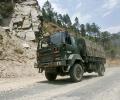
In 2005, the Border Road Organisation was asked to construct 73 roads in the strategically important regions along the Sino-India border but there has been huge delay in implementation of the project which has apparently left the army unhappy.

Iran is fighting a different war: Older, slower, and in some ways more dangerous. Iran doesn't need to shoot down an F/A-18. It only needs to make the Strait of Hormuz feel dangerous long enough for insurance markets, shipping companies, and oil futures traders to do the rest. Prem Panicker continues his must-read daily blog on the war in the Middle East.
Praising the Indian students awarded at the function, he said the young generation is the hope of the two countries.
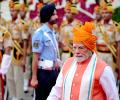
Prime Minister Narendra Modi will travel to China to attend the Shanghai Cooperation Organisation (SCO) summit, marking his first visit in over seven years. The visit signals a potential improvement in India-China relations after recent tensions.

Sources said the Indian delegation was warmly greeted by senior officials of the Chinese Army before the talks began.
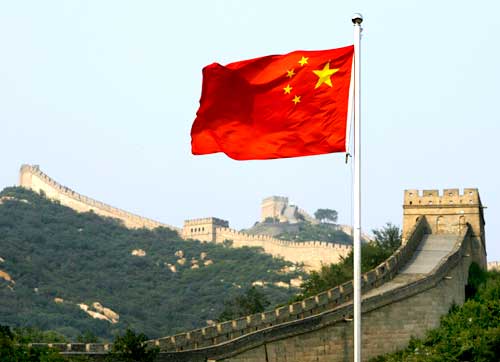
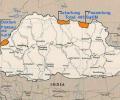
Bhutan firmly abides by the one-China principle meaning Taiwan and Tibet are part of China and stands ready to work with China for an early settlement of the boundary issue and advance the political process of establishing diplomatic relations, it said.
Committing to maintain peace and tranquility on the boundary, India and China on Saturday agreed that it was an "important guarantor for growth in ties and in this context pledged to early conclusion of negotiations on a proposed pact aimed at avoiding flare-ups on the border.

The Global Times, a prominent state-run Chinese media outlet, published an article titled "China and India are cooperation partners, not rivals: Xi," highlighting President Xi Jinping's remarks about the bilateral meeting, saying, "as long as the two countries stick to this overarching direction, China-India relations can sustain steady and long-term growth."

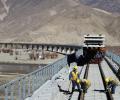
China is set to build a rail link connecting Xinjiang province with Tibet, part of which will run near the Line of Actual Control (LAC) with India.
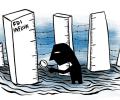
The government has not made any amendments to the foreign direct investment (FDI) policy for countries sharing land border with India, sources said on Wednesday. In 2020, the government issued Press Note 3 under which investors from these land bordering countries have to mandatorily take prior approval of the government for making investments in any sector.
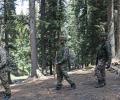
'It is typical of China's strategic deception of making virtue out of necessity,' observes Rup Narayan Das.

He said both sides reaffirmed to sincerely work towards complete disengagement of the troops along the LAC.
Prime Minister Manmohan Singh and Chinese Premier Li Keqiang signed the border agreement to ensure that both countries do not tail each other's military teams along the LAC. Sheela Bhatt reports from Beijing

India emerged from the war militarily bruised and strategically altered. The United States, under the guise of friendship, had succeeded in achieving what open alignment never could: The psychological and political repositioning of India within the Cold War order, points out Dr Kumar.

'The muscularity of the last three years didn't bring any dividends and if anything, Chinese attitudes only hardened,' says Ambassador M K Bhadrakumar.

The Army chief said the situation along the Line of Actual Control with China has been stable, but it needs constant vigil.
